
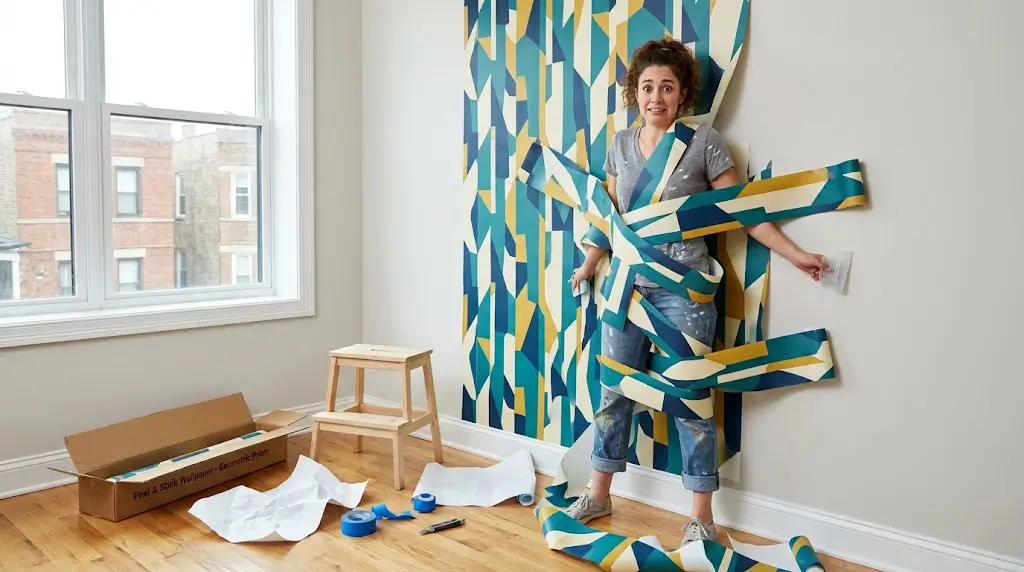
An accent wall in a Chicago condo is usually just paint. It can be removable wallpaper. It can also be a few boards on drywall. Most condo boards never ask to review that kind of work.
Cosmetic changes inside your unit rarely need HOA board sign-off. An architectural committee exists to protect the building structure. It also protects shared systems. It does not care about your color choices.
A few accent wall projects cross into territory your HOA cares about. This includes new electrical work. It includes work on a shared wall. It also includes anything visible from a hallway or a lobby.
This guide explains which accent walls pass without issue. It tells you which ones need a phone call to your property manager first. It also explains what happens if you skip that call.
The Short Answer: Most Accent Walls Are Fine
Condo accent wall HOA rules almost never apply to paint. They do not apply to wallpaper or lightweight trim. None of it touches the building’s structure or shared systems.
Most governing documents draw a hard line between a structural change and a cosmetic change. An accent wall usually lands on the cosmetic side of that line.
A typical bylaws clause bars owners from doing anything that could impair the structural integrity of the building or alter its original design. That clause is written for load-bearing walls and floor plans. It is not written for a can of paint.
This holds true across nearly every kind of Chicago condo. It applies from a high-rise unit in Streeterville or the Gold Coast to a two-flat conversion in Lincoln Park or Lakeview.
So when people ask can I paint my condo wall Chicago the honest answer is almost always yes. You can do it without paperwork. This is true as long as the wall you are painting is inside your own unit and not a shared surface.
The exceptions below are narrower than most owners expect. They depend more on what’s behind the wall than on the wall itself.
When You DON’T Need HOA Approval
When you’re wondering do I need HOA approval for accent wall paint or removable wallpaper, the answer is usually no, because these projects don’t touch anything the association is responsible for maintaining or insuring. They’re non-structural, cosmetic changes classified as unit owner responsibility, the same as picking a paint color for your bedroom. A few common accent wall projects that typically skip HOA review entirely include:
- Painting an accent wall in any color, including bold or dark shades, since paint is a cosmetic change and fully reversible with primer.
- Installing peel-and-stick wallpaper accent walls, a low-tack, reversible install and a type of removable wallpaper that comes off cleanly without damaging drywall underneath.
- Adding a wood slat accent wall Chicago owners often choose for a living room, provided the wall is confirmed non-load-bearing and no new electrical is involved.
- Applying picture frame molding directly over existing drywall, since it’s a surface-level interior finish rather than a structural addition.
None of these projects change the unit’s footprint. They do not add weight to the structure. And of course, they do not touch plumbing. They do not touch HVAC systems. So, do not touch wiring shared with the rest of the building.
A wall might back up to a neighbor’s unit. It might sit along an exterior wall or a common wall. You should check your building’s governing documents before you start. You need to confirm the wall in question is entirely within your unit.
When You DO Need Approval (or Should Ask First)
Some accent wall projects do need a look from your condo board, and skipping that step is where owners run into trouble. Under the Illinois Condominium Property Act, condo boards are given authority over common elements and shared building systems, and several accent wall choices touch exactly that territory. A condo wall alteration approval process typically kicks in whenever a project adds electrical load, opens up a wall, or affects a surface the building itself is responsible for. Projects that usually call for approval, or at minimum a heads-up to your property manager, include:
- A TV feature wall with new electrical for outlets, in-wall wiring, or LED lighting.
- Any accent wall built on a party wall or other shared wall between units.
- An accent wall on a surface visible from a hallway, lobby, or other common area.
- Any accent wall project that requires cutting into or attaching hardware through a shared system, like plumbing chases or electrical risers.
Vintage buildings add another wrinkle. Many older Chicago buildings have interior walls. These walls often look purely decorative. In fact they are load-bearing. This is especially true in greystone condo conversions. These units were built with a railroad floor plan. A central wall runs the length of the unit. Your building may fall into the pre-1978 category. Any work might disturb old painted plaster. This includes sanding a wall. It also includes cutting into a wall for wood slats. Can also trigger the EPA Lead-Safe renovation rule, which requires certified, lead-safe work practices from your contractor. Both of these are reasons a wall that looks simple on the surface can still need a second opinion.
TV Feature Walls and Electrical Work
A TV feature wall with LED lighting is one of the most common accent walls that needs HOA sign-off, and it’s rarely about the TV itself. It’s the wiring behind it. Adding outlets requires opening up drywall. Running in-wall low-voltage cable also requires opening drywall. Installing LED strip lighting requires opening drywall as well. An electrician must do this work. The electrician connects directly to the building’s electrical system. Almost every condo board treats this work as an alteration. They do not view it as a simple cosmetic update.
New wiring in a Chicago condo often requires HOA approval. It also requires a separate city permit. You must get this permit from the Chicago Department of Buildings. Electrical work is one of the few categories the city always regulates. The city enforces this rule regardless of what your building allows.
Anything on a Shared or Party Wall
A party wall, meaning any wall shared between your unit and a neighbor’s, is a zone of heightened attention for almost every HOA board. Anything you attach to it, drill into it, or add weight to on your side can transmit sound, vibration, or structural stress to the unit on the other side. Boards generally classify a party wall as a shared wall and, by extension, a common element that no single owner can modify without the board’s sign-off. Even a straightforward wood slat or picture frame molding project can require approval if it lives on this kind of wall, so it’s worth confirming which walls in your unit are shared before you start measuring.
How to Check Your Building’s Rules Before You Start
Before you buy a single board or a roll of wallpaper, spend twenty minutes confirming your specific Chicago condo renovation rules, since every building’s governing documents are different, and getting condo remodel HOA approval Chicago boards accept the first time saves weeks. Start with your CC&Rs, short for covenants conditions and restrictions, the master document that spells out what owners can and can’t alter. Most buildings also publish a separate set of house rules or an alteration agreement that covers smaller projects like accent walls specifically. A simple, repeatable process looks like this:
- Pull your building’s CC&Rs and bylaws from your closing documents or ask your property manager for a copy.
- Call or email your property manager and describe the exact project, including materials and whether electrical work is involved.
- Ask directly whether your building’s architectural committee needs to review the project, or whether it falls under a pre-approved category.
- Get any approval in writing, even for a project you’re fairly confident doesn’t need it, so there’s a record if a question comes up later.
If your project is more involved, such as anything touching electrical, plan on checking the City of Chicago building permits portal as well, since Chicago requires city sign-off in addition to HOA approval for most permitted work. This step alone saves more owners from headaches than any other single piece of advice in this guide.
What Happens If You Skip Approval
Skipping HOA approval on a project that needed it rarely blows up immediately, which is exactly why it’s tempting. The consequences tend to show up later. Boards can issue fines for unapproved work, and many governing documents give the board the right to require an owner to return the wall to its original condition at the owner’s own expense, regardless of how much was already spent.
The bigger risk shows up at resale. Illinois law requires condo sellers to disclose information about the unit and building to prospective buyers, and unpermitted or unapproved work is exactly the kind of detail that surfaces during that process. Buyers’ attorneys routinely review a building’s permit and approval history as part of due diligence, and an undisclosed alteration can delay closing, trigger a price reduction, or unravel a deal entirely. A five-minute email to your property manager is a much smaller cost than any of those outcomes, every time.
Renters: What You Can Do Without Losing Your Deposit
Renters have less flexibility than owners, but accent wall rental Chicago options still exist without risking a security deposit. Peel-and-stick wallpaper remains the safest choice, since it’s a reversible install with a low-tack adhesive that lifts cleanly off painted drywall and leaves no residue behind, which is exactly what most leases require for any wall treatment.
That holds whether the unit is a high-rise rental downtown or an apartment inside an older vintage building, since this kind of removable wallpaper is designed to work on painted drywall and plaster alike. Picture frame molding and painted accent walls are riskier for renters, since both usually count as a permanent change under a standard lease and can lead to a deduction at move-out unless a landlord has agreed to it beforehand. The one rule that protects a deposit every time: get written permission from your landlord before painting or attaching anything to a wall, and keep that permission on file until you move out.
Ready to Add an Accent Wall the Right Way?
Every Chicago building handles accent walls a little differently, and the fastest way to avoid a fine or a stalled resale is to ask before you start, not after. HandyBandi installs accent walls across Chicago condos and always checks a building’s rules and CC&Rs before work begins, whether that’s a simple paint refresh or a full accent wall installation Chicago project with electrical and lighting involved. If you’re not sure where your project falls, reach out and we’ll help you figure out what your specific building requires before any work starts.