
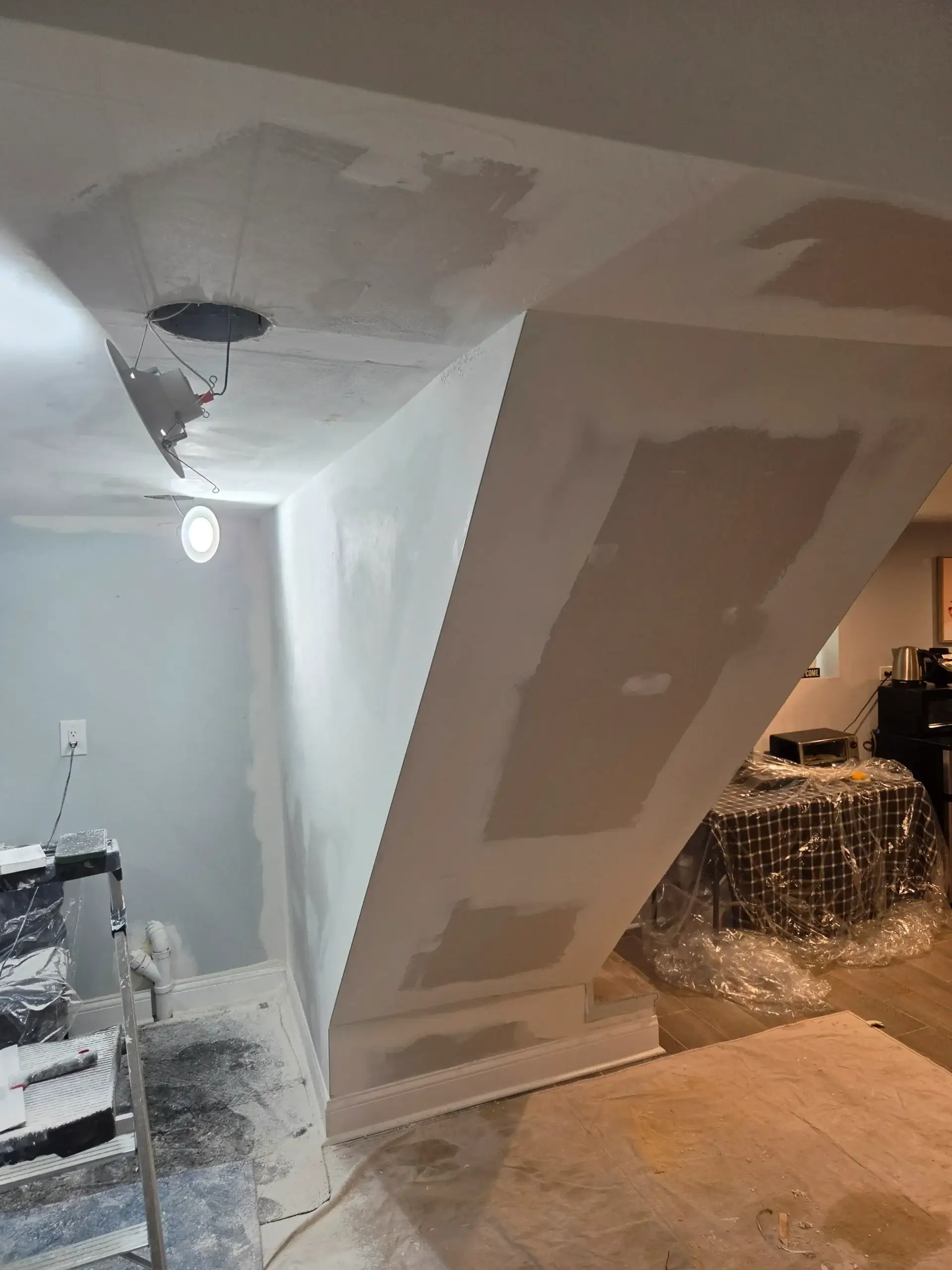
Drywall Repair in Chicago
A hole was punched through drywall during a move. A crack spreads across a ceiling corner. A water stain showed up after a storm last week. Chicago homeowners deal with these drywall repairs every week. HandyBandi handles every one of them. Our crew patched a nail pop seam in a Pilsen two flat last Tuesday. The crew matched a knockdown ceiling texture on a bungalow the same afternoon. They closed a twelve inch hole from a moving accident before lunch the next day. Same day appointments are open most weekdays. Every job starts with a written price. The price is not a guess.

Request a free drywall repair estimate and HandyBandi can usually get someone out this week.
About HandyBandi Drywall Repair
HandyBandi is a licensed and insured drywall contractor. Chicago homeowners have used HandyBandi for a single nail pop. They have also used them for a full ceiling rebuild after a plumbing leak. Every technician on our drywall crew carries proof of Illinois licensing. Literally, every technician carries general liability coverage. Every job closes out with a 30 day workmanship warranty in writing. A seam might telegraph through paint within 30 days. A patch might show a line within 30 days. We will come back. We fix it at no charge.
We run same day drywall repair Chicago requests through our dispatch line every weekday, and most small holes and cracks get an appointment window within 24 hours. Larger jobs, like a full wall section or a plaster ceiling with failing keys, get a walkthrough first so the estimate reflects the actual scope, not a phone guess. Pricing is itemized before anyone opens a bucket of joint compound, materials and labor listed separately, so there’s no surprise line item when the invoice shows up. Drywall repair sits alongside HandyBandi’s full lineup of home services in Chicago, and it’s usually the first call homeowners make before repainting a room or listing a condo for sale.
Why Chicago Homeowners Choose Us
Service Details:
Drywall Repairs We Handle in Chicago
Not every drywall problem looks the same, and the right fix depends on size, location, and what caused it in the first place. HandyBandi’s drywall repair Chicago crews handle holes from movers and doorknobs, hairline cracks from settling, nail pops along seams, sagging ceilings after a leak upstairs, and texture matching so the patch disappears instead of standing out. Garden unit basements and older two-flats tend to bring their own quirks, which is exactly why we send someone who’s seen the specific problem before, not a generalist guessing at it.
Holes and Impact Damage
Drywall hole repair Chicago jobs range from a doorknob dent to a twelve-inch gap from a moving mishap. Small holes under 4 inches get mesh tape and one to two coats of joint compound. Bigger holes get a California patch or a backer board repair, feathered smooth before priming.
Cracks, Seams and Nail Pops
Drywall crack repair Chicago calls usually start as a hairline crack along a seam or a nail pop where a fastener worked loose. We cut back the damaged tape, re-tape with mesh tape or paper tape, then skim coat the area so it blends into the wall.
Ceiling Drywall Repair
Ceiling drywall repair Chicago requests are often tied to a water stain. They are often tied to a sagging ceiling section. This happens after a leak from the unit above. We check for active moisture with a moisture meter. We replace any water damaged board. We rule out mold growth. We do this before closing up texture and paint.
Related Drywall Services
HandyBandi’s drywall repair Chicago services connect naturally to a few other jobs, especially when damage traces back to water, an outdated popcorn ceiling, or a room that needs full board work instead of a patch. Below are the three related services our crew handles most often, plus the texture work that keeps a repair invisible once it’s painted. If damage started with a leak from a unit above, or a sump pump backup in a garden unit basement, checking for water damage first is worth it before any patching starts, since wet framing behind fresh drywall just fails again a few months later.
What's Included with a Service?
Water Damage Drywall Repair
Stains, sagging boards, and soft spots after a leak need drying and moisture testing before any drywall goes back up. Our water damage drywall repair Chicago team handles the full process, from moisture meter readings to mold-safe removal and rebuild, so the wall doesn’t fail again next season.
Drywall Installation
New walls, garage conversions, and basement build-outs call for fresh board, not a patch. HandyBandi’s drywall installation Chicago crews hang 1/2 inch drywall for standard rooms and 5/8 inch Type X where fire code requires it, then tape, mud, and finish to a level 4 finish or level 5 finish.
Popcorn Ceiling Removal
Textured ceilings from the 1970s and 80s scrape off clean in most Chicago homes, provided there’s no asbestos in the original texture. Our popcorn ceiling removal Chicago service tests first, then scrapes, skim coats, and refinishes to a smooth or knockdown texture matched to the room.
Texture Matching and Finishing
Every wall has a texture, orange peel, knockdown, skip trowel texture, or a smooth level 5 finish, and a patch that skips this step shows up under raking light. We match the pattern before priming, and handle accent wall installation Chicago requests when one wall gets a different finish.
How Much Does Drywall Repair Cost in Chicago?
Drywall repair cost Chicago jobs typically land around $500 for a standard patch and paint job, per recent metro-wide pricing data. Small holes under 4 inches run $75 to $150 with mesh tape and joint compound. Medium holes from 5 to 12 inches, the kind left by a doorknob or a moving accident, run $150 to $350 for a patched section. Larger holes over 12 inches usually mean cutting out a section and screwing new board to the studs, priced at $50 to $75 per square foot or a flat $400 to $1,000 depending on access. Ceiling repairs cost 30 to 50 percent more than wall repairs of the same size, since working overhead is slower and compound tends to sag before it sets. Most Chicago contractors, HandyBandi included, charge a minimum job fee of $150 to $250 to cover a technician’s trip and materials, even for one small patch. See the full handyman pricing in Chicago rate sheet on our site for every service we run.
| Type of Work | Chicago Cost |
|---|---|
| Small hole (up to 4") | From $175 |
| Medium hole (5-12") | From $275 |
| Large hole / section (12"+) | From $450 |
| Drywall repair per sq ft | From $18/sq ft* |
| Ceiling drywall repair | From $350 |
| Texture matching | From $150 |
| Plaster crack repair (pre-1960s) | From $250 |
| Plaster wall repair (pre-1960s) | From $400 |
| Emergency service | +$250 fee |
Hole Size Decides the Repair Method
The size of the hole decides the repair method more than almost anything else, and it’s the fastest way to estimate cost before a technician even arrives.
This covers damage up to 4 inches. It covers doorknob dents. It covers drywall anchor holes. It covers most nail pops. The fix uses mesh tape over the hole. We apply one to two coats of joint compound. We feather the compound past the edges. Then we do a light sand. Then we apply primer. The cost runs $75 to $150. Most jobs finish in under two hours.
5 to 12 inches: this size usually comes from a moving accident, a kicked-in spot, or an old thermostat cutout. HandyBandi cuts a California patch or butterfly patch from a matching piece of board, sets it with backer board or a furring strip behind the gap, then tapes and muds in two to three coats. Cost runs $150 to $350.
Over 12 inches: patching a single sheet stops making sense at this point. We cut back to the nearest studs, screw in new board with drywall screws, and treat the seams like new construction. Cost runs $50 to $75 per square foot, or $400 to $1,000 for a typical section.
| Hole Size | Repair Method | Chicago Cost |
| Up to 4″ | Mesh tape + 1-2 coats joint compound | $75 – $150 |
| 5″ to 12″ | California/butterfly patch + backer board | $150 – $350 |
| Over 12″ | Cut to studs, new board + drywall screws | $50-$75/sq ft or $400-$1,000 |
Repair or Replace? How We Decide
Not every damaged section is worth patching, and HandyBandi walks through the same short list of criteria on every job before recommending one option over the other.
Size of the affected area comes first. A patch under two square feet almost always makes sense. Past that, a full sheet replacement often costs about the same as extensive patching and holds up better long term.
Moisture is the next check. If a moisture meter shows elevated readings behind the surface, patching over wet board just means doing the job twice within a year.
Mold growth changes the decision immediately. Per EPA guidance on mold cleanup, any moldy area over 10 square feet should go to a licensed contractor rather than a DIY scrub, and HandyBandi replaces the affected board instead of treating it cosmetically.
Sagging is the last flag. A ceiling or wall section that sags under its own weight usually means the fasteners or the board itself have failed, and replacement holds up better than a patch that won’t hold.
Plaster Walls in Pre-1960s Chicago Homes
Homes across Chicago were built before the 1940s. These homes were not built with drywall at all. This includes bungalows and greystones. It includes classic two flats in neighborhoods like Logan Square. They are made of lath and plaster. Thin wood strips are nailed to the studs. Multiple coats of plaster cover the strips. The plaster squeezed through the gaps. It hardened into plaster keys on the back side.
You can usually tell the difference by knocking on the wall. Drywall sounds hollow and thin. Plaster sounds solid, feels thicker under your knuckle, and often shows thin, web-like cracks instead of one clean line, since the plaster is a continuous shell rather than separate sheets.
Repairing plaster isn’t the same job as patching drywall, and a crew that only knows drywall usually gets it wrong. When plaster keys break away from the lath, the wall loses its grip and starts to bow or drop. The fix is to reset the plaster’s hold on the lath, sometimes with plaster buttons pulling it back tight, then skim coat with a veneer plaster finish to match the original wall.
A generalist who patches over that movement with joint compound gets a repair that cracks around the edges again within a season, since the plaster underneath is still loose. HandyBandi’s crews are trained on both systems, so a greystone in Logan Square gets a plaster wall repair Chicago job, not a drywall patch pretending to be one.
Keeping Dust Out of the Rest of Your Home
Sanding drywall seams throws fine dust everywhere. Sanding a skim coat throws fine dust everywhere. Sanding old plaster texture can be worse. HandyBandi seals off the work area before any sanding starts. HandyBandi covers doorways and vents with plastic sheeting. Dust stays inside the room. Dust does not drift through the rest of a two flat or condo.
Sanders run on HEPA vacuum attachments, which pull dust at the source instead of letting it settle on every surface in the house. For larger jobs, we can add negative air pressure inside the work zone to keep dust from pushing out under the plastic when a door opens.
Sanding drywall compound generates fine particles that OSHA regulates as respirable crystalline silica, and our crews follow those dust control standards on every job, not just the ones with visible dust.
FAQ:
Here are the questions HandyBandi's drywall repair Chicago customers ask most before booking, covering cost, timeline, texture matching, plaster, and permits. Answers below reflect current Chicago pricing and typical job timelines, not a generic national average.
+− How much does drywall repair cost in Chicago?
Most small patches run $75 to $150. Medium holes run $150 to $350. A typical full job with paint lands around $500. Larger sections can run higher. Ceiling work can run higher. The cost depends on square footage. The cost depends on access.
+− How long does a typical drywall repair take?
A small hole or crack usually finishes in a single visit. The visit takes two to four hours. This includes drying time between coats. Larger sections can take one to three days. Full ceiling work can take one to three days. This allows the compound to cure properly between coats.
+− Can you match my existing wall or ceiling texture?
Yes, our crews match orange peel, knockdown, skip trowel, and smooth level 4 finish or level 5 finish work so the repair blends into the surrounding surface. We test the pattern on a sample area before finishing the full patch.
+− Do you repair plaster walls, or only drywall?
We handle both. Pre-1960s Chicago homes with lath and plaster need a different repair method than drywall, and our crews are trained on the plaster button and skim coat techniques that keep an old wall from cracking again.
+− Should I repair or replace the damaged section?
It depends on the size of the damage, whether there’s moisture or mold behind the surface, and whether the board is sagging. Our technician checks all three during the estimate and recommends whichever option holds up longer for the price.
+− Do you paint after the repair, or do I need a separate painter?
HandyBandi can prime and paint the repaired area to match, or coordinate with our painting services in Chicago team for a full room repaint. Either way, the patch is paint-ready before we leave.
+− Do I need a permit for drywall repair in Chicago?
Standard drywall patching typically doesn’t require a permit in Chicago. Larger structural work, like removing load-bearing framing, may need sign-off, and the Chicago Department of Buildings can confirm requirements for your project.